Les maîtres de l'Aïkido
Biography of Morihei Ueshiba
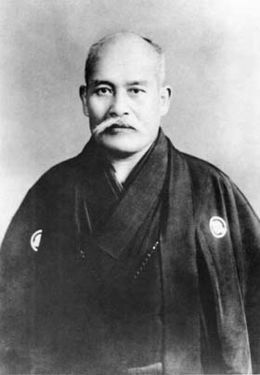
O Senseï Morihei UESHIBA (1883-1969)
Foreword
Following my previous publications on the masters of Aikido, I wanted to provide a French-language reference text on the life of the Founder, Morihei Ueshiba.
Most of the "official" sources remain hagiographical in nature, containing omissions and sometimes minimizing the role played by certain individuals in the creation and development of Aikido. My objective is to retrace the Founder’s journey from a factual historical perspective, drawing upon the documents now available (books, articles, interviews, photographs, and videos) thanks to the valuable work of martial arts researchers and historians.
Aikido was the result of a long process of maturation. To understand Morihei Ueshiba is to accept his paradoxes. This biography therefore seeks to provide an approach attentive to the complexity of the events, contexts, and influences that shaped both the man and the art he founded.
I would like to express my deepest gratitude to Stanley Pranin, Ellis Amdur, Guillaume Erard, and Chris Li, whose research made this factual historical perspective possible.
Childhood and Early Education
Morihei Ueshiba was born on December 14, 1883, in Tanabe, Wakayama Prefecture, on the island of Honshu. Born prematurely and of frail constitution, he was the fourth child and eldest son of Yoroku Ueshiba, a prosperous farmer, local notable, and member of the village council. His mother, Yuki Itokawa, came from a landowning family of noble descent and played a decisive role in the young Morihei’s spiritual awakening.
At the age of seven, he was sent to the Jizōdera Buddhist temple, affiliated with the Shingon school, where he studied Confucian and Buddhist texts. There, he developed an early fascination with religious narratives, ascetic practices, and heroic figures of the past.
Because of his fragile health, his father encouraged him to strengthen his body through the practice of sumō, swimming, and rigorous physical training.
After completing his formal education, Morihei graduated from the Yoshida Abacus Institute and entered the Tanabe Tax Office, where he worked in the Land Revenue Department as an auditor.
Morihei became involved in a popular protest movement against new fishing legislation. He sided with the local small-scale fishermen, whom he believed were being unfairly disadvantaged by the law. Shortly afterward, he resigned from his position at the tax office.
In 1901, at the initiative of his father and the insistence of his wealthy brother-in-law, Morihei left Tanabe for Tokyo to prepare for a career in commerce. At eighteen years old, he began working as a salesman before opening his own stationery business, Ueshiba Shokai.
During this first stay in Tokyo, Morihei briefly studied the jūjutsu of the Tenjin Shin’yō-ryū under the direction of Tokusaburō Tozawa. These early experiences further strengthened his attraction to the martial arts.
Shortly after arriving in Tokyo, Morihei was struck by a severe case of beriberi, a disease caused by a vitamin B deficiency that was quite common at the time. This event brought his first stay in Tokyo to an abrupt end. Forced to leave the capital, Morihei returned to Tanabe. Soon after his return, he married Hatsu Itokawa, whom he had known since childhood.
Military Service and the First Martial Arts
In 1903, despite his small stature (approximately 1.55 meters tall), Morihei Ueshiba succeeded in enlisting in the Imperial Japanese Army. He was assigned to the 37th Infantry Regiment of the 4th Division in Osaka. He quickly distinguished himself through his endurance, determination, and above all his skill in bayonet fighting (jūken-jutsu). He was later transferred to the 61st Wakayama Infantry Regiment at the end of December and promoted to corporal.
In 1904, the Russo-Japanese War broke out. Morihei was sent to Manchuria, where he was stationed in Dalian, in northeastern China. He spent approximately a year and a half in the war zone, serving with distinction and attaining the rank of sergeant. This experience of war left a profound mark on him.
Upon his return from the front, he was assigned to Hamadera, near Osaka. During this period, he actively resumed his martial training outside the military framework. He attended the dojo of Masakatsu Nakai in Sakai, where he continued his study of Gōtō-ha Yagyū-ryū jūjutsu, which he had first encountered during his military service in 1903.
Released from the army in 1906, Morihei returned to Tanabe and worked on the family farm. The following years were marked by a wide range of activities: farming, intensive physical conditioning, and martial training. In July 1908, he received a first-level teaching license (Shodan Menkyo) from Master Nakai, certifying his technical proficiency in the fundamentals of the art. Between 1907 and 1908, Morihei was also introduced to Judo when his father invited Kiyoshi Takagi, a 3rd dan instructor from the Kōdōkan, to train the local youth.
In 1909, Morihei also became involved in political and social activities closely linked to the defense of traditional Shinto. He supported the renowned naturalist and thinker Minakata Kumagusu, a central figure in the resistance movement against the government's policy of shrine consolidation (jinja gōshi). This movement opposed the confiscation of shrine lands by the state, their forced administrative merger, and more broadly the weakening of local religious practices in favor of political and financial interests. Morihei proved especially sensitive to these issues, which he perceived as forms of social injustice and attacks against Japan’s traditional spiritual order.
Settlement in Hokkaidō and the Meeting with Sōkaku Takeda
At the beginning of the 1910s, Morihei Ueshiba increasingly felt that he would never fully realize his potential if he remained in Tanabe. In 1911, shortly after the birth of his eldest daughter, Matsuko, he turned his attention to the settlement projects encouraged by the Japanese government on the still largely undeveloped island of Hokkaidō.
In 1912, he played a leading role in organizing the departure of fifty-four families from Tanabe. The group settled in May in a remote region in the north of the island, destined to become the village of Shirataki. Living conditions were extremely harsh: a severe climate, virgin land, isolation, and unrelenting physical labor. Morihei quickly emerged as a natural leader, guiding the settlers, assisting newcomers, and playing an active role in structuring the community.
It was in this austere environment that the decisive event of his martial life occurred in February 1915. While staying at the Hisada Inn in Engaru, Morihei met Sōkaku Takeda, the renowned master of Daitō-ryū jūjutsu. Introduced by Yoshida Kotaro, in the presence of Nenokichi Sagawa and under the attentive gaze of his young nephew Noriaki Inoue, Morihei attended Takeda's technical demonstrations.
Although already an experienced martial artist, Morihei immediately recognized Takeda’s technical superiority and martial depth. He committed himself to an intensive study of Daitō-ryū, participating in extended seminars and devoting a considerable portion of his financial resources to this instruction.
Seeking direct transmission, he built a dojo on his property and invited Takeda to reside there. During this period, Morihei received private lessons every day, sometimes for two hours each morning, and dedicated himself entirely to fulfilling the demands of his teacher, even attending to his daily needs. This relationship, both demanding and formative, profoundly shaped his understanding of budō. Morihei became one of Takeda’s finest students and occasionally accompanied him on teaching tours throughout Hokkaidō.
In 1916, a devastating fire destroyed nearly 80 percent of the village of Shirataki, including Morihei’s home, and claimed several lives. This disaster significantly reduced the time he could devote to training, although he continued to accompany Takeda whenever possible.
Family life was also marked by important events during this period, including the birth of his eldest son, Takamori, in 1917. However, in November 1919, Morihei learned that his father Yoroku was gravely ill. He immediately left Hokkaidō to return to Tanabe, abandoning his house, lands, and possessions, which he entrusted to Takeda. This decision brought to an end four years of a deeply formative experience, both human and martial.
Meeting Onisaburō Deguchi: The Spiritual Turning Point
As he hurried back to Tanabe in the autumn of 1919 to attend to his dying father, Morihei Ueshiba learned that Onisaburō Deguchi, the charismatic and controversial figure of the Ōmoto-kyō religious movement, was staying in Ayabe, not far from his route.
Deguchi was particularly renowned for his practice of Chinkon Kishin, a form of mental asceticism intended to calm the mind, strengthen vital energy, and promote union with the divine through spirit possession.
Morihei felt a compelling need to meet this man and ask him to pray for his father's recovery. This encounter, originally motivated by personal distress, had a deep and lasting impact on him. Deguchi’s words and mystical vision of Shinto left a far greater impression on Morihei than anything he had previously experienced.
Yoroku Ueshiba passed away on January 2, 1920, at the age of seventy-six. His death plunged Morihei into a period of intense inner turmoil. Seeking meaning and spiritual comfort, he decided to join the Ōmoto community in Ayabe with his entire family.
After settling in Ayabe, Morihei began a new life within a rapidly expanding religious community devoted to the spiritual renewal of Japan and the world. Far from being a simple mystical movement, Ōmoto-kyō developed an ambitious politico-religious vision, blending Shinto, messianism, criticism of imperial authority, and aspirations for world renewal through the kami (divine beings), while giving great importance to experiences of spiritual possession.
Deguchi quickly placed his trust in Morihei, recognizing him as a disciplined, sincere, and action-oriented individual. Morihei actively participated in the sect’s spiritual practices, including meditation, rituals, physical austerities, and communal labor. This immersion reinforced his belief that body, mind, and the sacred could not be separated.
At Deguchi’s request, and in anticipation of the creation of a militia, Morihei converted part of his residence into a dojo and established the Ueshiba Juku (Ueshiba Academy). There he taught Daitō-ryū jūjutsu techniques to followers of Ōmoto-kyō.
The first year in Ayabe was marked by major family tragedy. In August 1920, his three-year-old son Takemori died from a childhood illness. The following month, his second son Kuniharu passed away at only six months of age. These successive losses struck Morihei deeply and intensified his commitment to the spiritual path.
On February 11, 1921, Japanese authorities launched their first repression against Ōmoto-kyō. Several leaders of the movement, including Onisaburō Deguchi, were arrested for crimes of lèse-majesté and violations of press laws. The government destroyed the sect’s principal buildings in Ayabe.
Although deeply affected, Morihei was not targeted by the authorities. In June, his third son, Kisshōmaru, was born. Following Deguchi’s release on bail, Morihei actively helped rebuild the movement. Alongside his martial instruction, he also managed nearly nine hundred tsubo of agricultural land. This dual activity, cultivating the earth while practicing martial arts, came to represent for him a fundamental harmony between humanity, nature, and budō.
At the beginning of 1922, Morihei endured another personal loss with the death of his mother, Yuki Itokawa.
That same year marked a turning point in his martial career. From April 28 to September 15, 1922, his teacher Sōkaku Takeda stayed in Ayabe with his family. Living within the Ōmoto community for six months, Takeda taught Daitō-ryū to Morihei and his students at the Ueshiba Juku.
This period was historically significant because it was then that the term aiki was incorporated into the art’s name, officially becoming Daitō-ryū Aikijūjutsu, reportedly following a suggestion by Onisaburō Deguchi, despite the fact that Morihei’s two teachers did not particularly appreciate one another.
Takeda’s stay also provided an opportunity to structure the teaching system. At the conclusion of these months, in September 1922, Takeda Sensei awarded Morihei the Kyoju Dairi instructor’s license, the highest certification he issued at that time. This license represented both recognition of Morihei’s technical competence and an explicit contractual relationship with Takeda, who closely monitored the transmission of his art.
Until Takeda’s death in 1943, Morihei’s authorization to teach would remain partial, a circumstance that would have a lasting influence on the way he later presented and structured his own art.
The Mongolian Expedition and the Trial of Death
In February 1924, Onisaburō Deguchi, leader of the Ōmoto sect, secretly embarked on an expedition to Mongolia at the invitation of Yutaro Yano, a retired naval commander who was also a smuggler acting on behalf of the Black Dragon Society (Kokuryūkai), founded in 1901 by Ryohei Uchida, a disciple of the famous ultranationalist Toyama Mitsuru.
Yano believed that Deguchi’s charisma would enable him to win the trust of local populations and facilitate the seizure of power by Mongolian warlords supported by his network of Japanese ultranationalist activists. Deguchi departed in the utmost secrecy, hoping to establish a “terrestrial paradise” in Mongolia, accompanied by a small group that included Morihei Ueshiba, Matsumura (a lawyer), Nada (an English-speaking barber), and Yano himself.
Their journey first took them through Korea, then under Japanese occupation, before reaching Fengtian (modern-day Shenyang Province), where members of the Black Dragon Society served as guides and interpreters. The political situation was highly unstable: the young Republic of China, founded in 1912, was being torn apart by conflicts among rival warlords.
Yano allied himself with Lu Zhankui, a Mongolian officer serving under the Chinese warlord Zhang Zuolin, in a rebellion against the Chinese government aimed at creating an independent Manchu-Mongolian state. Deguchi and his companions offered military assistance to support this project.
During a carefully orchestrated meeting, Deguchi proclaimed himself the Dalai Lama and assigned Chinese names to members of his entourage. Morihei became Wang Shou-Kao, the “King of the Protectors.”
At the beginning of March, the group headed toward Mongolia, traveling in rented automobiles over rough and scarcely developed roads. During the journey, Morihei suffered facial injuries in an accident.
They eventually reached the border town of Taonan and then Ulanhot. There, Deguchi treated local inhabitants and animals, while Morihei experimented with early forms of healing through the hands and taught martial arts in an effort to recruit soldiers.
However, the situation soon deteriorated. Zhang Zuolin informed the Chinese authorities of their activities. Lu Zhankui relocated his headquarters to Baiyantala (modern-day Tongliao), but upon arrival, he, his men, and the Japanese group were arrested.
All were sentenced to death.
The following morning, Deguchi’s group was brought before what amounted to a mock firing squad. Their lives were ultimately spared through the intervention of Kohinata Hakurō, a Japanese adventurer sent to China as an agent by the “Shadow Shogun” Toyama Mitsuru.
(After the Second World War, Hakurō would accept Morihei Ueshiba’s invitation to join the board of directors of the Aikikai.)
After five months of dangerous adventures, marked by alliances with local militias and confrontations with bandits, the group was repatriated by Japanese diplomatic authorities in July 1924.
This direct confrontation with death and the perils of a country at war left a profound impression on Morihei.
Early Military Support and Institutional Recognition
Upon returning to Ayabe after the Mongolian episode, Morihei resumed teaching at the Ueshiba Academy while continuing his agricultural work. His instruction increasingly attracted the attention of influential circles, particularly within the Imperial Japanese Navy.
Among his earliest supporters was Admiral Seikyo Asano, an adherent of Ōmoto-kyō and younger brother of Wasaburo Asano, a member of the sect's religious council and a close associate of Onisaburō Deguchi.
Asano was convinced of Morihei Ueshiba's exceptional value and openly praised him among fellow officers. He encouraged another prominent admiral, Isamu Takeshita, to travel personally to Ayabe in order to discover Morihei's martial art.
The meeting between Morihei and Admiral Takeshita proved decisive. The admiral was deeply impressed by Morihei's technical mastery and martial presence. Following their encounter, concrete arrangements were made for Morihei to offer demonstrations and conduct training courses in Tokyo, marking his gradual entry into the circles of Japan's military and political elite.
In December 1925, Morihei was invited to Tokyo by Admiral Takeshita. An official event was organized at the admiral's residence in honor of former Prime Minister Gombei Yamamoto, attended by senior military officers and members of the imperial court.
On this occasion, Morihei delivered a particularly remarkable demonstration, emphasizing spear techniques (yari) and displaying extraordinary strength and ease, notably by moving heavy rice sacks with apparent effortlessness.
Following this performance, an intensive twenty-one-day training course was organized at Aoyama Palace for members of the Imperial Guard and certain members of the Imperial Family.
However, this rapid recognition generated opposition. Several government officials expressed hostility because of Morihei's close ties with the Ōmoto-kyō movement, which they regarded as subversive. Faced with this political pressure, Morihei chose to withdraw and return to Ayabe.
Following another invitation from Admiral Takeshita, Morihei returned to Tokyo once again in 1926. On that occasion, businessman and politician Kiyoshi Umeda placed part of his residence in Aizumi-chō, Yotsuya, at Morihei's disposal for use as both living quarters and training facilities.
Morihei taught members of the Imperial Court, personnel of the Imperial Household Ministry, as well as officers from the army and navy and prominent figures from the financial world.
Unfortunately, Morihei collapsed after a training session, suffering from open ulcers and severe stomach and liver disorders. He personally attributed these ailments to an ascetic contest with a yogi in Ayabe, during which he reportedly consumed large quantities of salt water, as well as possible aftereffects of the Mongolian expedition.
Informed of his condition, Onisaburō Deguchi came to see him and ordered him to return immediately to Ayabe to regain his strength.
A revealing indication of the atmosphere of suspicion surrounding Ōmoto-kyō followed shortly thereafter. Soon after this meeting, Morihei was stopped by two plainclothes police officers and taken to a police station for questioning concerning the content of his conversation with Deguchi. This incident illustrates the close surveillance under which he remained.
Among his students during this period were his nephew Noriaki Inoue, Yutaka Otsuki, Hidetarō Kubota (Nishimura), Kenji Tomiki, and naval commander Kosaburo Gejo.
Hidetaro Kubota, a student at Waseda University and one of the most accomplished judoka of his generation (later sixth dan), challenged Morihei and was defeated. Impressed, he became one of Morihei's strongest advocates within university judo circles, encouraging numerous practitioners to train under him.
Close to the Founder, Kubota occasionally served as his private secretary and shared his interest in Ōmoto-kyō. It was through Kubota that Kenji Tomiki was introduced to Morihei Ueshiba during the summer of 1926. Deeply impressed by the master's techniques, Tomiki immediately decided to join his dojo, beginning a relationship that would later play a major role in the history of Aikido.
The relationship between Ueshiba and Gejo was more one of friendship than a formal teacher-student bond. It is generally accepted that through Kosaburo Gejo, Morihei was exposed to a high level of techniques and concepts from the prestigious Yagyu Shinkage-ryu tradition, of which Gejo was a Shihan of the Owari lineage.
Establishment in Tokyo
Admiral Isamu Takeshita, supported by several influential benefactors, organized Morihei Ueshiba’s permanent return to Tokyo. With the approval of Onisaburō Deguchi, Morihei settled in the capital with his entire family in October 1927, thereby opening a new and decisive phase in his martial journey.
During the first years following this move, Ueshiba taught mainly in the private residences of his patrons and influential students. This situation reflected a still informal stage in the development of his teaching, reserved for a restricted circle composed of admirals, generals, as well as political and financial dignitaries.
In February 1928, the support group led by Takeshita, the Aioikai, decided to designate Ueshiba’s art under the name “Aioi-ryū Aiki-jūjutsu.” This marked the first official use of a designation distinct from Daitō-ryū. This initiative, attributed to Takeshita in his capacity as president of the Aioikai, aimed to allow Ueshiba gradually to free himself from the authority of Takeda Sokaku.
Later, the term “Aiki-Bujutsu” would also be used, particularly during gatherings known as “Aiki-bujutsu Konwakai,” discussion meetings devoted to reflection on the nature of the Founder’s art.
At the end of the 1920s, Morihei also came into contact with Dr. Kenzo Futaki, a renowned specialist in infectious diseases. Through him, he was exposed to ascetic exercises transmitted by Bonji Kawatsura, such as Ame no Torifune, Furitama, and Otakebi Okorobi. Futaki would later found the Misogi no Renseikai.
It was also during this period that Morihei began using a new terminology, placing greater emphasis on the concepts of ki and kokyū.
In 1930, Ueshiba received a visit from Jigoro Kano, the founder of Judo, at the invitation of Admiral Takeshita. Impressed by his virtuosity, the founder of Judo offered him a position teaching at the Kodokan.
Despite the mutual respect shared by the two men, Ueshiba Sensei declined the offer. However, he agreed to teach a number of judoka personally selected by Kano Sensei. Kano consequently sent some of his finest students, among them Minoru Mochizuki, Jiro Takeda and Shuichi Nagaoka.
Through this gesture, Kano implicitly acknowledged the exceptional value of Ueshiba’s teaching.
That same year, Major General Makoto Miura, a hero of the Russo-Japanese War and former student of Sokaku Takeda, sought out Morihei with the intention of testing him. Defeated in their encounter, he immediately enrolled as a student. At his request, Ueshiba was appointed instructor at the Toyama Military Academy (Rikugun Toyama Gakkō).
The Rise of the Kobukan
After several temporary relocations, Ueshiba Sensei undertook the construction of a dojo dedicated to his art. Faced with the rapid increase in the number of students, a larger facility became necessary. Supported in particular by Koshiro Inoue and the Ogasawara family, he succeeded in acquiring land in Ushigome, Wakamatsu-chō (present-day Shinjuku). Thanks to a fundraising campaign organized by Admiral Takeshita and the patronage of numerous dignitaries and benefactors, a dedicated dojo was built in 1931.
It was officially inaugurated in April in the presence of Admiral Asano, Admiral Takeshita, General Makoto Miura, Dr. Kenzo Futaki, Morihei’s principal students, and members of his family.
The wooden building, covering approximately 120 square meters (80 tatami mats), was named the Kobukan Dojo (Imperial Warrior Dojo). It served both as a training hall and as a residence for the Ueshiba family and around twenty uchi-deshi.
A calligraphy created by Deguchi bearing the inscription “Ueshiba Juku” (Ueshiba Academy) adorned the place of honor. The daily schedule was rigorous, with two classes in the morning and two in the evening, interspersed with periods of free practice. Owing to the extreme severity of the training sessions and the presence of highly experienced practitioners from other disciplines, the dojo quickly earned the nickname “The Hell Dojo of Ushigome.”
Admission standards were strict: applicants had to provide a letter of introduction and obtain sponsorship from two members before being granted a personal interview with the Founder.
His nephew Noriaki Inoue resided in the dojo alongside the uchi-deshi and assisted his uncle in both teaching and demonstrations. At that time, he was regarded as Morihei’s most accomplished disciple and frequently represented him.
It was during this period that many disciples who would later play a major role in the development of Aikido received their training, including : Kenji Tomiki, Minoru Mochizuki, Yasuhiro Konishi, Hisao Kamada, Ikkusai Iwata, Kaoru Funahashi, Tsutomu Yukawa, Aritoshi Murashige, Shigemi Yonekawa, Yoshio Sugino, Rinjiro Shirata, Takako Kunigoshi, Gozo Shioda ou encore Zenzaburo Akazawa.
Sōkaku Takeda taught at the Kobukan Dojo from March 20 to April 7, 1931. For the last time, Ueshiba’s name appeared among those recorded in Takeda Sensei’s enrollment register.
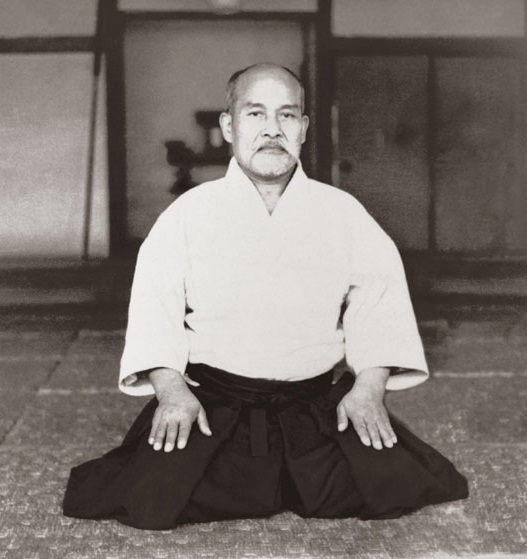
Creation of the Budo Senyokai and Proximity to Far-Right Circles
Throughout the 1930s, Morihei Ueshiba maintained close ties with Ōmoto-kyō. In the summer of 1932, Deguchi founded the Dai Nippon Budo Senyokai (Society for the Promotion of Martial Arts), and Morihei became its first president. This paramilitary organization aimed to train the ever-growing members of the Ōmoto-kyō militia by promoting martial arts throughout Japan.
The Budo Senyokai expanded rapidly. Seventy-five affiliated dojos were established across Japan within Ōmoto-kyō facilities, with a central dojo in Takeda, Hyōgo Prefecture. Morihei spent his summers there supervising and developing their training.
Noriaki Inoue, a committed Ōmoto believer, became chief instructor of the Budo Senyokai in Kameoka and founded several dojos throughout the Kyoto and Osaka regions. Other uchi-deshi, including Hisao Kamada, Kaoru Funahashi, and Aritoshi Murashige, were dispatched as instructors to Budo Senyokai dojos.
This period also saw Ueshiba become increasingly associated with far-right circles, to which he had originally been exposed through Deguchi’s relationships with Ryohei Uchida and Mitsuru Toyama.
He notably associated with members of the Black Dragon Society (Kokuryūkai) and the Cherry Blossom Society (Sakurakai), the latter holding some of its meetings within the Kobukan Dojo itself.
In 1934, other paramilitary organizations emerged under the aegis of Deguchi and his ultranationalist networks: the Shōwa Shinseikai and the Seinen Kōdōkai, both sponsored by Morihei Ueshiba.
The Founder maintained relationships with high-ranking ultranationalist officers and taught in several military institutions, including the Toyama Military Academy (Rikugun Toyama Gakkō), the Nakano Intelligence School (Rikugun Nakano Gakkō), the Naval Staff College (Kaigun Daigakkō), and the Imperial Japanese Army Academy (Rikugun Shikan Gakkō).
Succession and Consolidation of the Teaching
Faced with the expansion of his art and the need to ensure the continuity of his teaching, Morihei sought a successor capable of carrying his art forward.
His only son, Kisshomaru Ueshiba, was only eleven years old. Ueshiba Sensei first proposed his daughter Matsuko in marriage to his disciples Yoshio Sugino and Minoru Mochizuki, but both declined.
Ultimately, in 1932, he chose Kiyoshi Nakakura, a highly talented kendoka, as his son-in-law. Through the mediation of Hakudo Nakayama, the influential master of Kendo and Iaido and a close friend of Ueshiba, a marriage was arranged between Matsuko and Nakakura. Taking the name Morihiro Ueshiba, Nakakura officially became the Founder’s adopted son and designated heir.
Kiyoshi Nakakura trained at the Kobukan and established a Kendo and Iaido club within the dojo itself. Among his students were Rinjiro Shirata, Masahiro Hashimoto, and Kaoru Funahashi. The group even participated in competitions, further enriching the martial culture of the Kobukan.
Published in 1934, the Aiki-jujutsu Densho (Book of Aiki-Jujutsu), better known as Budo Renshu (“Martial Training”), represented Morihei Ueshiba’s first structured effort to formalize his teaching.
Designed as a reference manual for advanced practitioners who had attained the level of Hiden Mokuroku, the work compiled a collection of techniques derived from Daitō-ryū. Produced in less than a year, it reflected a collaborative effort within the Kobukan.
The illustrations were entrusted to Takako Kunigoshi, a young art student who had joined the dojo in 1933, while demonstrations were performed by the disciples Yonekawa and Funahashi. Ueshiba personally supervised the entire project, intervening even in the details of posture and positioning to ensure the accuracy of the depicted forms.
The publication was edited by Kenji Tomiki, one of the Kobukan’s most advanced students and a central figure within the dojo. His contribution to the organization of the material, and quite possibly to the writing of a significant portion of the text itself, was crucial.
Expansion to Osaka and Teaching at the Asahi Newspaper
In 1933, Morihei Ueshiba’s teaching, now referred to as Aiki-Budo, entered a new phase of development by extending beyond Tokyo following a request from the Asahi News newspaper.
In a context of increasing political tensions and threats from far-right groups, the newspaper’s director, Ishii Mitsujiro, called upon the Founder to train the personnel responsible for security at the Osaka headquarters.
Ueshiba Sensei therefore traveled regularly to Osaka, spending several days each month there, accompanied by some of his uchi-deshi, including Tsutomu Yukawa, Shigemi Yonekawa, Kaoru Funahashi, and Rinjiro Shirata, and occasionally by his wife Hatsu.
The group was hosted by Takuma Hisa, the newspaper’s Director of General Affairs in Osaka and leader of the Asahi Dojo. Most members of the dojo were already experienced martial artists holding ranks in Judo, Kendo, or Sumo.
Training was rigorous and accompanied by an unprecedented documentation effort. Under Hisa’s initiative, techniques were systematically photographed and annotated after each training session.
This effort to preserve and disseminate the teaching reached its peak in 1935 with the production of the film Budo, sponsored by the Asahi newspaper.
The documentary shows Morihei Ueshiba performing a wide range of techniques, both empty-handed and with weapons, including bayonet and sword, surrounded by students who had travelled from Tokyo.
Despite the intensive and serious nature of the training, Ueshiba Sensei awarded no ranks to the Asahi Newspaper students, even though he had already begun issuing certificates and titles to some of his other disciples.
O-Sensei: A Recognition Born from Martial Collaborations
In 1935, a general of the Imperial Japanese Army’s high command requested that karate master and Ueshiba disciple Yasuhiro Konishi develop self-defense techniques for women employed by the Japanese Government Railways.
Konishi Sensei then asked Kenwa Mabuni for assistance in developing standardized training methods that could be easily memorized by female students.
Together they created a kata incorporating the essence of their respective schools. While finalizing it, they decided to present their work to Ueshiba.
Although he approved many of the movements, Ueshiba suggested modifications, arguing that the kata should be adapted specifically for women, whose vulnerable target areas differed from those of men.
They also took into consideration the lifestyle of Japanese women of the era. Traditionally dressed in kimono and wearing geta sandals, their natural posture tended to be higher than that of men.
The collaboration of these three distinguished masters resulted in a kata combining elements of Aikido, Jujutsu, and Karate.
Named Seiryu, literally "The Willow," its purpose was not to oppose an attack directly but rather to harmonize with the attacker’s force, like a willow tree bending gracefully before the wind instead of resisting it.
The success of the kata was such that Seiryu was later incorporated into the military training program for railway personnel.
It was during this period of nearly daily training with karate masters Konishi, Mabuni, and Otsuka that Ueshiba acquired the nickname O-Sensei ("Great Teacher").
This honorific title, bestowed by his peers, testified to his status as one of Japan’s foremost martial masters during the 1930s.
This collaborative work later culminated in 1937 with the publication of a book on women’s self-defense entitled Yamato Ryu Goshinjutsu.
The first half of the 1930s marked a true golden age for Ueshiba’s Aiki-Budo. Several satellite dojos were established in Tokyo and Osaka, while Ueshiba was increasingly invited to teach in military academies, naval schools, police institutions, large companies, and specialized schools.
By this time, he had become a celebrated figure, widely recognized as one of Japan’s greatest martial arts masters.
The Second Ōmoto Incident
December 8, 1935 marked the beginning of the Second Ōmoto Incident. In a context of increasing authoritarianism and militarization in Japan, the government launched a large-scale operation against the Ōmoto-kyō movement, which was now regarded as a threat to public order.
Nearly five hundred armed police officers simultaneously raided the movement’s principal centers, arresting its leader Onisaburō Deguchi, his close associates, and thousands of followers. Accused of lèse-majesté and conspiracy, many were imprisoned, while the sect’s facilities were systematically destroyed and its assets confiscated.
As part of this repression, the Budo Senyokai was dissolved by the authorities, who considered it a dangerous paramilitary organization. A warrant was issued for the arrest of Morihei Ueshiba by the Kyoto police.
However, having been warned in advance by supporters within the police forces, Ueshiba happened to be in Osaka at the time. He benefited from the protection of several influential disciples, among them Kenji Tomita, Chief of Police of Osaka, who arranged a formal interrogation and subsequently released him.
When the Kyoto authorities persisted in their efforts to apprehend him, Ueshiba was discreetly transferred and sheltered by other senior Osaka police officials sympathetic to his cause, narrowly escaping what had appeared to be an inevitable arrest.
This unusual situation can partly be explained by precautions taken beforehand. As early as the summer of 1935, Onisaburō Deguchi had asked Ueshiba to resign from the presidency of the Budo Senyokai and distance himself from the organization.
During the subsequent trial, Deguchi explicitly stated that Ueshiba was not part of the movement’s governing circle, thereby helping to shield him from prosecution.
Nevertheless, the Founder found himself in a delicate position. As one of the few prominent members of the movement to avoid arrest, he now had to "officially" sever his ties with Ōmoto-kyō to avoid further suspicion and continue his work as an instructor within Japan’s national military institutions.
On a personal level, this rupture also led to lasting tensions, particularly with his nephew Noriaki Inoue, who reproached him for not sharing the fate of the movement’s imprisoned leaders.
The Departure of the Adopted Son and the Reconsideration of Succession
The consequences of the Second Ōmoto Incident also affected Morihei Ueshiba’s family life.
At that time, his adopted son Kiyoshi Nakakura, now known as Morihiro Ueshiba, was directly confronted by the repercussions of the government crackdown. During the events, while Morihei and his wife were in Kyoto, Nakakura remained alone in Tokyo with the young Kisshomaru.
Fearing that his adoptive family's proximity to Ōmoto-kyō could lead to accusations of high treason, he took the initiative of removing all religious symbols from the dojo, going so far as to destroy calligraphies created by Onisaburō Deguchi.
This action, motivated by a desire to protect the family and the dojo, revealed the distance that already existed between Nakakura and the Founder’s spiritual convictions.
Although Morihei Ueshiba, having ultimately escaped prosecution, did not resent him for this decision, the episode nevertheless exposed a deeper divide.
Despite several years of diligent training, Nakakura began to doubt both his ability to fully master the Founder’s teachings and his capacity to succeed him.
In October 1936, he chose to resume his position as a police officer in the Imperial Palace and, with the support of Hakudo Nakayama, formally withdrew from the Ueshiba family.
His divorce from Matsuko was finalized the following year, bringing an end to a childless marriage.
Kiyoshi abandoned both his adopted name and his status as designated successor, devoting himself entirely to his career as a kendoka.
The Break with Sokaku Takeda
In June 1936, Sokaku Takeda’s visit to the Asahi Newspaper dojo in Osaka was an event that was as significant as it was unexpected. Invited—or at least expected—by Takuma Hisa and his group, the Daito-ryu grandmaster arrived at the dojo and declared that the instruction provided up to that point covered only the fundamentals of the art, implying that Morihei Ueshiba had not mastered the entire technical repertoire.
The following day, an unusual situation emerged: Asahi newspaper employees trained with Ueshiba in the morning and with Takeda in the evening, at different locations. This arrangement continued for a week, until Master Ueshiba decided to leave Osaka and return to Tokyo without any official announcement. Master Takeda was thus left with this prestigious and lucrative position, while Ueshiba went on to devote himself to teaching at other dojos in Tokyo and Osaka.
In reality, this episode reflected deeper tensions between the two men. Far from being merely a hasty departure, the event can be seen as the culmination of a lengthy process through which Morihei Ueshiba sought to free himself from Sokaku Takeda’s influence and assert his independence.
The Influence of Kashima Shinto-ryu
Having freed himself from his teacher’s authority, Morihei Ueshiba continued his quest to explore the martial use of weapons. Following his informal study of the techniques and principles of the Yagyu Shinkage-ryu school under Kosaburo Gejo in the late 1920s, he now turned his attention to another weapons tradition introduced by his students from the Kodokan. At the founder’s request, his student Zenzaburo Akazawa began studying Kashima Shinto-ryu in May 1937, accompanied by Ueshiba’s sixteen-year-old son, Kisshomaru, who was just beginning his martial arts training. Instruction was most often provided by Master Masashige Aoki, with the assistance of other teachers, including Hitoshi Kodama, Kinichi Iida, and, on occasion, Koichirō Yoshikawa, the son of the school’s founder.
The Kashima masters primarily taught within the Kodokan’s classical martial arts research group, established by Jigoro Kano, before continuing their instruction on their way back to Ueshiba Sensei’s dojo. By this time, Ueshiba was recognized as a master in his own right. Rather than training directly, he observed the classes closely, absorbing the movements and principles he considered most effective. During this period, the Kobukan’s uchi-deshi were increasingly drawn into the war effort, and only the young Zenzaburo and Kisshomaru received intermittent instruction in the fundamentals of the school.
This period marked a turning point in the founder’s martial practice: his approach to swordsmanship began to evolve, gradually incorporating elements observed in different styles. These influences from Kashima Shinto-ryu would later be integrated into his own personal method.
The Kobukan Under the Strain of War
When Japan entered into open warfare with China in 1937, the Kobukan Dojo’s equilibrium was severely disrupted. Around Morihei Ueshiba, the uchi-deshi gradually disappeared. Called up for military service or having volunteered, they were sent to China or Southeast Asia. Deprived of his principal assistants and facing declining attendance, O-Sensei increasingly focused his teaching on military institutions, working in particular with schools affiliated with the army, navy, and intelligence services. These included the Toyama Military Academy, the Nagano espionage school, the Naval Academy, the Naval War College, the Army Military Police School, the Naval Engineering and Firefighting School, and the Army University.
It was in this context that, in 1938, he published the book Budo, a privately printed work of approximately one hundred copies intended for a select circle of supporters and senior dignitaries. Originally written for Prince Kaya, this manual served both as a technical reference and as a means of raising funds during this difficult period. Ueshiba presented around fifty techniques, approximately one-third of which involved weapons: the sword, spear, bayonet, or knife. Several movements derived from the kumi-tachi practices of the Kashima school can be found in the manual.
The book is unique in that it is the only work in which the master, then in his fifties, personally demonstrates the techniques, assisted notably by his son Kisshomaru Ueshiba, Gozo Shioda, and a student named Okubo. Like Budo Renshu, published a few years earlier, this manual circulated discreetly and served as a reference for advanced practitioners, while also representing an attempt to codify the founder’s technical teachings and principles in writing at a pivotal moment in their development.
Morihei Ueshiba’s Ties to Manchuria
Several of Master Ueshiba’s close disciples were sent to Manchuria, a territory under Japanese control since 1932, to teach martial arts. Like Ueshiba Sensei and the networks surrounding him, they operated within the ideological framework of Dai-tō-a Kyōeiken, the Greater East Asia Co-Prosperity Sphere. Among them were Noriaki Inoue, Kenji Tomiki, Shigemi Yonekawa, and Zenzaburo Akazawa.
Through Master Ueshiba’s introduction, Tomiki took up a position as a calligraphy instructor at Daido Gakuin Academy in March 1936, while simultaneously teaching Aiki-Budo to the local military and to institutions associated with the imperial household. Yonekawa joined him toward the end of the year to assist him. A graduate of the Kobukan Dojo, Tomiki was selected for this mission by Hideki Tojo, who, after becoming head of the Japanese military police in Manchuria in September 1935, introduced Aiki-Budo into military police training and appointed Tomiki and his assistant, Hideo Ohba, as shihan (master instructors) at the academy.
Meanwhile, beginning in 1939, Ueshiba himself travelled regularly to Manchuria. As a member of the Association for the Promotion of Martial Arts, he was invited to participate in major martial arts gatherings bringing together leading figures of Japanese Budo (Budo Taikai). He gave notable demonstrations alongside renowned Kendo and Judo masters, attracting the interest of various prominent figures, including sumo champion Saburo Tenryu Wakuta and King Tokuo of Mongolia, both of whom wished to discover the aiki arts directly from O-Sensei in Tokyo.
In 1938, Ueshiba was appointed Budo advisor to Kenkoku University and its Shinbu-den Dojo, the largest dojo in Asia. He carried out this role with the support of his political connections, notably Hiraizumi Kiyoshi and Hideki Tojo, while delegating responsibility for teaching on site to Kenji Tomiki.
Master Ueshiba’s visits continued into the early 1940s, notably during the celebrations marking the 2,600th anniversary of the imperial dynasty in 1940 and, subsequently, the tenth anniversary of Manchukuo in 1942, when he gave a demonstration in Shinkyo in the presence of Emperor Puyi. On this occasion, he was not accompanied by his usual uke, his nephew Noriaki Inoue, but by Hideo Ohba, Kenji Tomiki’s assistant. Refusing to follow the conventional format of this type of demonstration, Ohba chose to attack the master with complete sincerity, turning the exercise into a genuine and unpredictable confrontation.
Despite these unusual circumstances, the performance deeply impressed those who witnessed it, while also provoking Ueshiba’s anger. He was displeased at having been compelled to demonstrate a form of Aiki-Budo that differed from the one he was then seeking to formalize. From 1943 onward, the course of the war made such journeys impossible.
The Establishment of the Kobukai Foundation
As Morihei Ueshiba’s activities in Tokyo expanded, the need arose to establish a formal administrative structure for his teaching. With the support of several of his principal patrons, the Zaidan Hōjin Kobukai was founded on April 30, 1940, as a non-profit foundation.
Government approval was secured through the efforts of Yoji Tomosue, head of the Sports Section at the Ministry of Health. Among the foundation’s principal financial supporters was businessman Shozo Miyazaka, who made a substantial donation of 20,000 yen. The foundation’s leadership was entrusted to prominent figures: Admiral Isamu Takeshita became its president, with General Katsura Hayashi serving as vice-president. The board brought together several personalities from political, military, and aristocratic circles, reflecting the considerable patronage enjoyed by Ueshiba. Its members included Prince Fumimaro Konoe, Marquis Toshitame Maeda, Takuo Godo, Kinya Fujita, Kozaburo Okada, Kenji Tomita, and Dr. Kenzo Futaki.
With Japan now engaged in the Pacific War, the world of Budo, heavily exploited by the militarist state, was mobilized as a means of moral and physical training in support of the war effort. Master Ueshiba was in great demand, travelling extensively and teaching at various military institutions, naval bases, and the military police school. These commitments frequently kept him away from the Kobukan and his family. Despite his intense activity, the dojo gradually emptied as students were mobilized and sent to the front. Even amid these difficult circumstances, marked by shortages, new talents emerged, including Koichi Tohei and Kisaburo Osawa in 1939, followed by Kanshu Sunadomari in 1941.
Demonstration Before the Imperial Family
Admiral Takeshita’s close connections with the Imperial Court led to the organization of a demonstration by Master Ueshiba at the Saineikan, the Imperial Guard’s dojo located within the grounds of the Tokyo Imperial Palace, in 1941.
Despite being in severely deteriorating health, suffering from jaundice and weakened by several days of involuntary fasting, Morihei Ueshiba agreed to perform. For the occasion, he chose Tsutomu Yukawa and Gozo Shioda as his partners. In the presence of Princes Takamatsu, Chichibu, and Mikasa, representing Emperor Hirohito, the demonstration was introduced by Admiral Takeshita.
Tsutomu Yukawa opened the enbu, but, out of deference to his weakened teacher, he attacked with restraint. Ueshiba, committed to an uncompromising demonstration, threw him with considerable force. Yukawa managed to fall as best he could, but injured his shoulder and was unable to continue. Forced to leave the tatami, he was replaced by Gozo Shioda, who carried on alone, launching successive attacks against the master for nearly forty minutes. He gave everything he had to support Ueshiba in what was the most important demonstration the latter had ever performed.
At that time, several members of the Imperial Family were among O-Sensei’s students. Alongside the Emperor’s brothers, Princes Takamatsu and Chichibu, were Prince Higashikuni, Prince Takeda, Prince Rio, and Prince Kitashirakawa, all belonging to collateral branches of the Imperial House. Ueshiba Sensei was regularly invited to the Imperial Palace to teach, notably Prince and Princess Takeda.
The Retreat to Iwama
As the war effort intensified, the first air raids on Tokyo began, and the majority of his students were gradually mobilized, activity at the Kobukan Dojo declined sharply, until only a handful of practitioners remained. At the same time, Morihei Ueshiba continued teaching at several military institutions, but he found himself increasingly isolated. Most of the senior uchi-deshi who had previously assisted him had now been called up for military service, considerably reducing the logistical and teaching support available to him.
It was in this context that he made a decisive choice. In the autumn of 1942, at the age of 59, he withdrew to Iwama, a rural village approximately 100 kilometres northeast of Tokyo, in Ibaraki Prefecture. Since the mid-1930s, he had been acquiring land there with the aim of creating a dedicated space for practice: an open-air dojo and an Aiki Shrine, where he could put into practice the principle of Heino-Ichinyo, according to which working the land and martial training are one and the same. Initially conceived as a place of retreat for intensive training, Iwama also became a refuge for him and his wife, allowing them to escape the growing dangers facing the capital.
His withdrawal was also motivated by declining health, particularly a serious intestinal illness, and, according to some sources, by disagreements over the direction taken by the Dai Nippon Butoku Kai. Ueshiba gradually distanced himself from his official duties and institutional life. He entrusted the management of the Kobukan and its administrative leadership to his son Kisshōmaru, assisted by Minoru Hirai and Kisaburo Osawa.
The Adoption of the Term Aikido
In 1942, against a backdrop of state centralization of the martial arts in Japan, the name Aikido was officially adopted. This development took place within the framework of a reorganization led by the Dai Nippon Butoku Kai, an organization based in Kyoto dedicated to preserving traditional Budo and samurai culture. Initially focused on promoting these traditions, particularly within the education system, the Butoku Kai gradually became an instrument serving Japan’s militarist ideology. Having recently been nationalized, it extended its control over a large proportion of the martial arts disciplines. It was in this context that the name Aikido was officially adopted to align the discipline’s designation with those of Kendo, Judo, Kyudo, and Karatedo, thereby facilitating its integration into the nine officially recognized Budo disciplines.
Morihei Ueshiba, who had by then withdrawn to Iwama, was not directly involved in this process. His school was represented by Minoru Hirai, who had joined the Kobukan in 1939 and was appointed director of general affairs at the dojo in 1942. Sent as a delegate to the Butoku Kai, Hirai Sensei played a leading role in securing official recognition for the discipline and in adopting the term Aikido. In his view, the term was neutral and comprehensive, making it possible to bring together the various schools of Jujutsu while avoiding conflicts with Kendo or Judo.
The introduction of the term Aikido marked an important milestone, establishing the discipline as an identity distinct from the Daito-ryu tradition from which it had emerged.
Part 3 — Coming soon
Consult the Bibliographical Sources
Interviews with Morihei Ueshiba
® All rights reserved.